
Rear View Mirror: Zolani Tete
A look back at the career of Zolani Tete
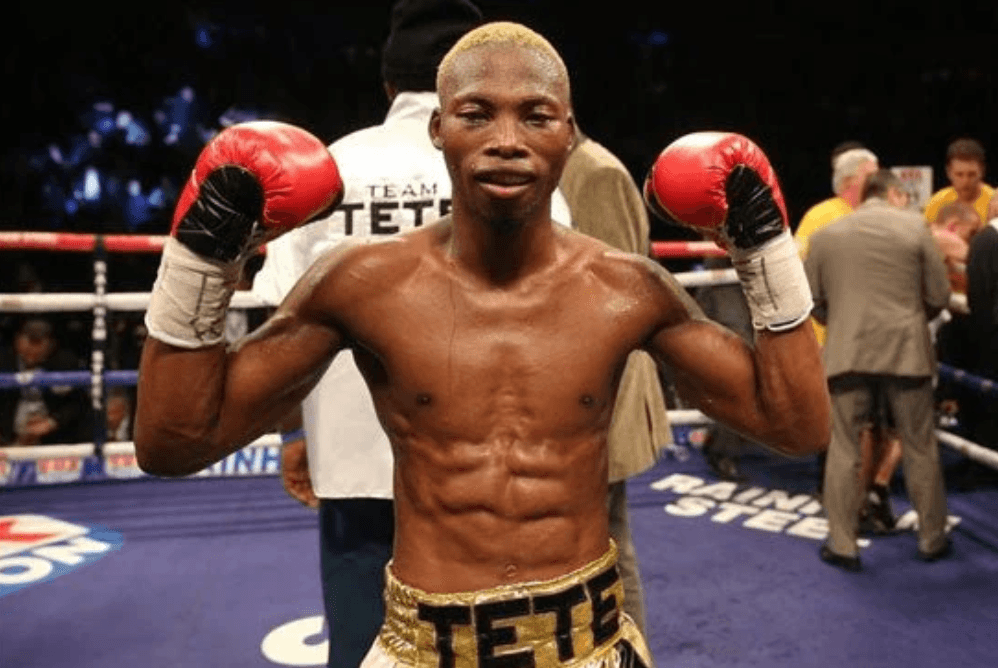
Rear View Mirror: A look back at the career of the "Last Born" Zolani Tete
GBN's Caledonian columnist Donald C Stewart takes a look in his rear view mirror at the life and times of Zolani Tete
Born in March 1988 in Cape Province, South Africa on the Eastern Cape on the 21st of August 2026 aged just 38 years, Zolani Tete was gunned down on the way back to his home.
There are many theories, points of view and discussions about why he was attacked, however, Tete, a boxer who fought at four weights - fly, super fly, bantam and super bantam – should have his career looked at through the eyes of his accomplishments in the ring, rather than speculation over why he lost his life outside it.
Active from 2006 to 2022, Tete was a two-weight world champion holding the IBF junior bantamweight title and also the WBO bantamweight crown. His career unfortunately is also defined by a four-year ban which had lapsed in July of this year as he was found guilty of failing a drugs test. When murdered, he was training for a comeback fight. There were reports that negotiations were in play after such a long layoff leading to hopefully getting back to the place that he felt he deserved. Of course, Tete for many is remembered for the fastest knockout, recognised by The Guinness Book of World Records, in a title fight when he managed to knock out Siboniso Gonya in 11 seconds of the first round.
But he is more than that.
The tributes came pouring in, with South Africa’s sports minister Gayton McKenzie saying that South Africa had, “lost one of the finest fighters it had ever produced”, whilst former sports manager Fikile Mbalula paid tribute, lamenting the “loss of a great South African who has made an immense contribution in the sport of boxing.”
And so, he did.
The rough childhood he endured, whilst his father was a pastor, saw Tete going with his brother Makazole into a gym when only eight years old.
He had people he looked up to and inspired him including South African greats like Vuyani Bungu and Welcome Ncita. Bungu came into Tete's life later when he trained him.
Claims were made that he had over 400 amateur fights with only three being losses which included taking on Hekkie Budler a future WBA, IBF Ring Magazine champion. In two fights against Tete won one and lost the other.
Tete 's professional career started on the 27th of May 2006 in the Eastern Cape in East London when he stopped Andile Solani in the very first round. After, he went on a spree, defeating everybody placed in front of him until on the 23rd of September 2007 in East London he won the WBF world flyweight belt.
It was a controversial win because his opponent, Vicky Tahumil, took off his gloves after the third round, claiming that he had been head-butted by Tete.
It was only his eighth fight.
He then defended it against Xolani Ntese in East London with a points win over 12 rounds on the 30th of March 2008, followed by a June defence where he stopped Francis Miyeyusho in the first round again in East London.
He then found himself in Johannesburg fighting for the vacant WBO African flyweight title against Anthony Mathias, managing to beat him by knockout in the very first round.
By 2010 he was fighting an eliminator for the IBF flyweight title in Johannesburg against Richard Garcia where he got a unanimous decision across three very wide scorecards
He then went to fight his first world title fight for one of the more recognised belts, but it was also his first loss as he was stopped in the fifth round in Carnival City on the 1st of September 2010 against Moruti Mthalane. It was not his only loss during this period as he ended up losing in nine months later against Juan Alberto Rosas in another IBF title eliminator in Plaza de Torres this time for the super flyweight crown. His third defeat came in a title eliminator in Cordoba taking on Roberto Domingo Sosa on the 1st of September 2012 losing a split decision which was very close. 115 to 114 on all three scorecards. Controversially his opponent Sosa did receive a warning about low blows but never had a point taken off, which could have made the result different.
On the 30th of November 2013 in Mexicali, he then took on Juan Carlos Sanchez Jr. for the IBF super flyweight title eliminator. A former champion, Sanchez Jr., had lost the IBF title on the scales when he fought Sosa previously. This was why he ended up back in an eliminator. The winner was going to become the mandatory challenger. Sanchez hit the floor in rounds 5 and 10, then Tete hit it in round six and lost points in rounds eight and nine for holding. Sanchez was deducted a point for spitting out his mouthpiece. Tete managed to put Sanchez away in round 10.
On the 18th of July 2014 for the vacant IBF World super flyweight title Tete took on Teiru Kinoshita and managed to win comfortably on points
The title was vacant because Daiki Kameda also lost the title on the scales!
Tete ended up in Liverpool, facing Paul Butler in 2015, with Butler hitting the deck in the 8th round. It was a stoppage which was his first successful defence.
Back home in East London, he then took the WBO African super flyweight title on points against Jether Oliva after he chose to vacate the world title rather than face the mandatory challenger McJoe Arroyo.
Signing with Frank Warren in December he then was back in Liverpool to face Jose Santos Gonzalez for the IBF international bantamweight title. Gonzalez hit the deck in the second and then from a right uppercut in the seventh, his fight was over, Tete winning by stoppage.
Staying in Liverpool in 2016 in June, he then stopped Victor Ruiz in his defence of his IBF international bantamweight title in the seventh round.
In 2017 the WBO interim World title was his in Leicester when he beat Arthur Villanueva on points, again by a wide margin having put Villanueva down in the 11th round.
He was now the interim champ but was then elevated to be the full champion.
Continuing his time in the United Kingdom, on the 18th of November 2017, Tete then faced Sibioniso Gonya in Belfast at the SSC Arena stopping Gagne in the first round with a right hook and the only punch of the fight which knocked Gagne out cold the 11th second! Referee Phil Edwards had an easy night and was able to call the whole thing off right there and right then!
Tete went back to Belfast in April of 2018 to defend his title against Omar Andres Narvaez, managing another wide points win – a complete shutout on all three cards.
And so, as 2018 was coming to an end, he was off to Ekaterinburg to defend against Mikhail Aloyan. Aloyan hit the deck in the first round Tete had points deducted for holding and Aloyan had a point deducted in round 11 for the exact same offence. The fight ended with Tete won 114 – 111 on all three scorecards.
Tete entered discussions to fight Nonito Donairre. Instead of facing Donairre, Tete lost his title on the 30th of November 2019 in Birmingham, where he was stopped in the third round, having hit the canvas twice against former world champion John Riel Casimero.
In 2022, he then went in to face Jason Cunningham in Wembley and beat him by knockout, however, the contest was later ruled a no contest because he tested positive for stanozol, the anabolic steroid, and UKAD gave him a four-year ban. van.
Then, on the 21st of August 2026, outside of his home in the town of Mdantsane, he was ambushed by two armed-men wearing balaclavas. His female companion escaped though was wounded. In the days following the attack, many arrests were made but appearances in court have been delayed. It renewed a lot of attention to South Africa's widespread violent crime and there has been suggestions that whilst he had been training for a comeback fight, with the highest murder rates in the world in South Africa would suggest that he may well have been caught up in more than just the sport of boxing. (According to the latest crime statistics there are around 58 people killed each day in South Africa).
And so Tete’s career, not least in the UK, was one built on tremendous success. Perhaps having somebody of Warren's credibility managing his career made a huge difference to the way in which it unfolded. But one thing that should always be remembered is that Tete came out of poverty, fought at a level that many of his childhood friends could only dream of and whilst he got caught with steroids, perhaps some credit should be remembered as the legacy that he left. The temptations to which he succumbed of trying to hold on to a legacy by using foul means is reprehensible, but it is part of a rich tapestry of a story rather than the totality of it.

More from Global Boxing News
News
Former world champion Zolani Tete shot dead outside his home
Former world champion Zolani Tete shot dead in an ambush outside his home
News
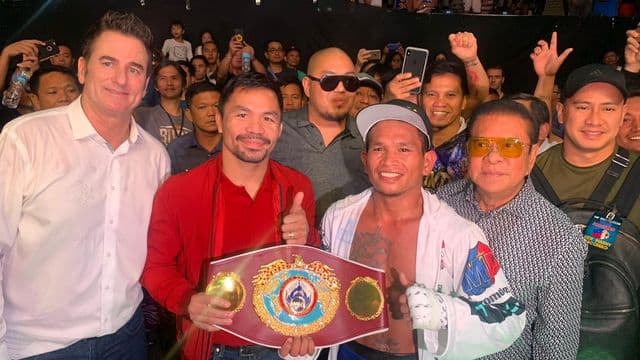
Manny Pacquiao backs John Riel Casimero to beat Zolani Tete
Manny Pacquiao wishes John Riel Casimero good luck in world title bid against Zolani Tete

News
Zolani Tete wants Naoya Inoue next to determine who is bantamweight king
Zolani Tete wants Naoya Inoue next